Time in physics
Time is defined by measurement and is a fundamental quantity in physics.

Time in physics is defined by its measurement: time is what a clock reads. In classical, non-relativistic physics, it is a scalar quantity (often denoted by t) and, like length, mass, and charge, is usually described as a fundamental quantity. Time can be combined mathematically with other physical quantities to derive other concepts such as motion, kinetic energy and time-dependent fields.
- definition
- Time is what a clock reads
- SI unit
- second (symbol: s)
- relative accuracy of UTC atomic time sta
- on the order of 10⁻¹⁵ (1 second in ~30 million years)
- modern conception
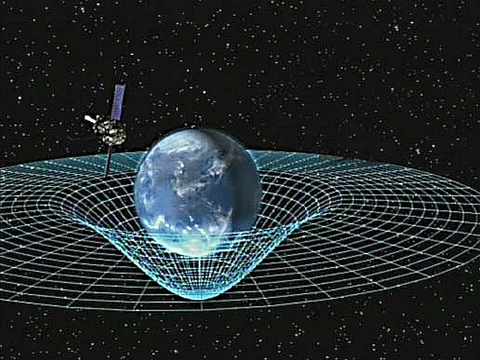
- based on Einstein's theory of relativity, time is a coordinate merged with space into spacetime
Lore & Background
Before clocks, time was measured by physical processes such as the heliacal rising of Sirius to mark the flooding of the Nile, the succession of night and day, the position of the sun, and the length of a gnomon's shadow. Eventually, instrumentation allowed operational definitions.
Reader's Guide
The conception of time evolved from Galileo and Newton's view of time as the same for everyone everywhere—a parameter—to Einstein's relativistic view where rates of time differ depending on relative motion, and space and time merge into spacetime, with time as a coordinate. According to the prevailing cosmological model of the Big Bang theory, time itself began as part of the entire Universe about 13.8 billion years ago. The thermodynamic arrow of time, defined by the growth of entropy in isolated systems, also marks an irreversible direction. Timekeeping has progressed from mechanical clocks and pendulum clocks to quartz and digital clocks, and now atomic clocks that can theoretically keep accurate time for millions of years.
Did You Know?
- Stephen Hawking identified three arrows of time: psychological, thermodynamic, and cosmological.
More in Relativity And Spacetime 1-22
Spotted an error? Know more?
This is a living reference — every entry is fact-audited, and reader corrections feed straight into our audit queue. Suggest an edit · See this site's audit record