Lorentz factor
Dimensionless factor quantifying relativistic time dilation and length contraction.

Jean Louis Van Belle - Ghent University / Vectorization: Mrmw · CC0
The Lorentz factor, also known as the gamma factor, is a dimensionless quantity that expresses how measurements of time, length, and other physical properties change for an object while it moves. It appears in several equations in special relativity and arises in derivations of the Lorentz transformations.
- field
- Special relativity, Lorentzian electrodynamics
- known_for
- Lorentz factor (gamma factor) in relativistic physics
- symbol
- γ (Greek lowercase gamma), sometimes Γ
Lore & Background
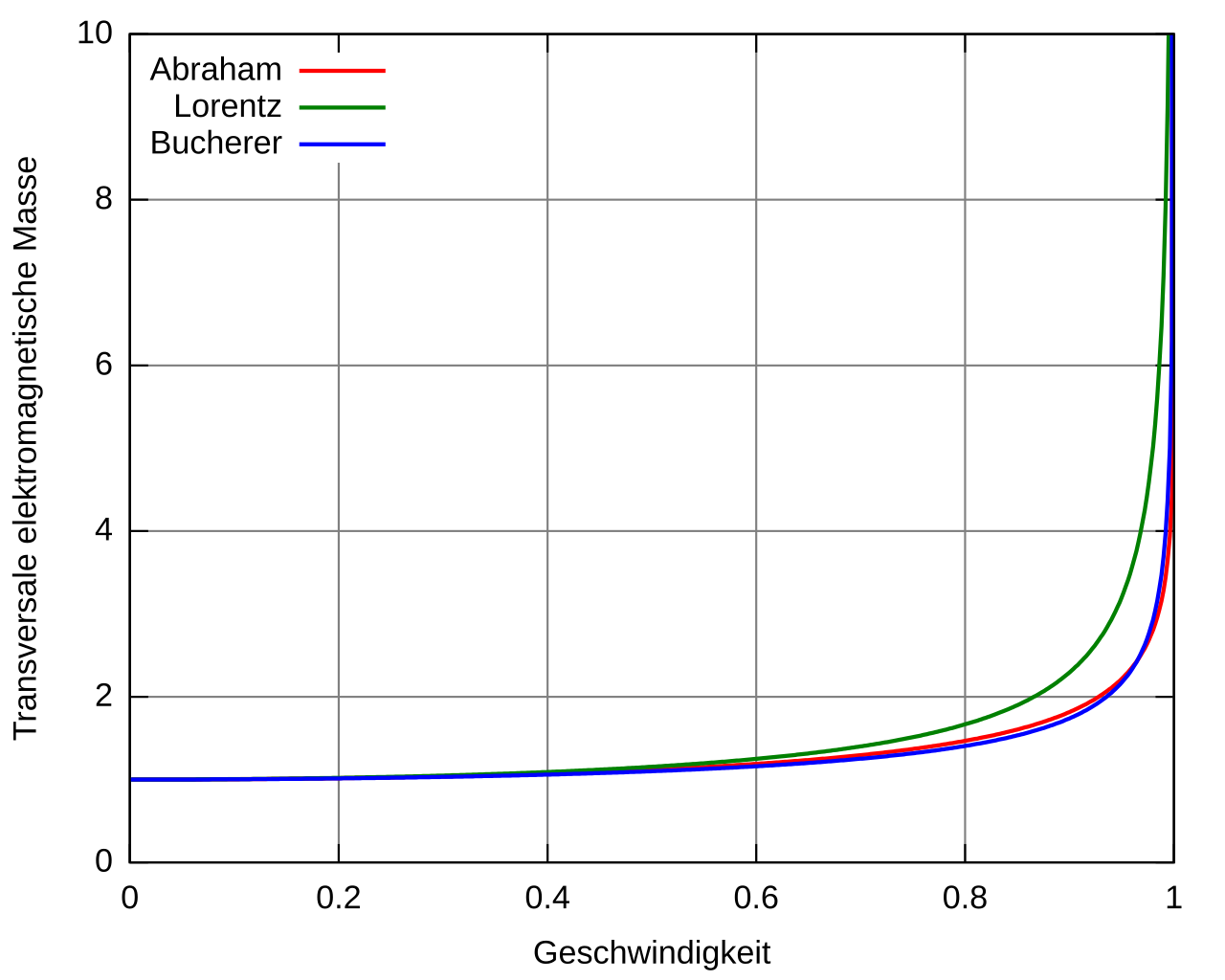
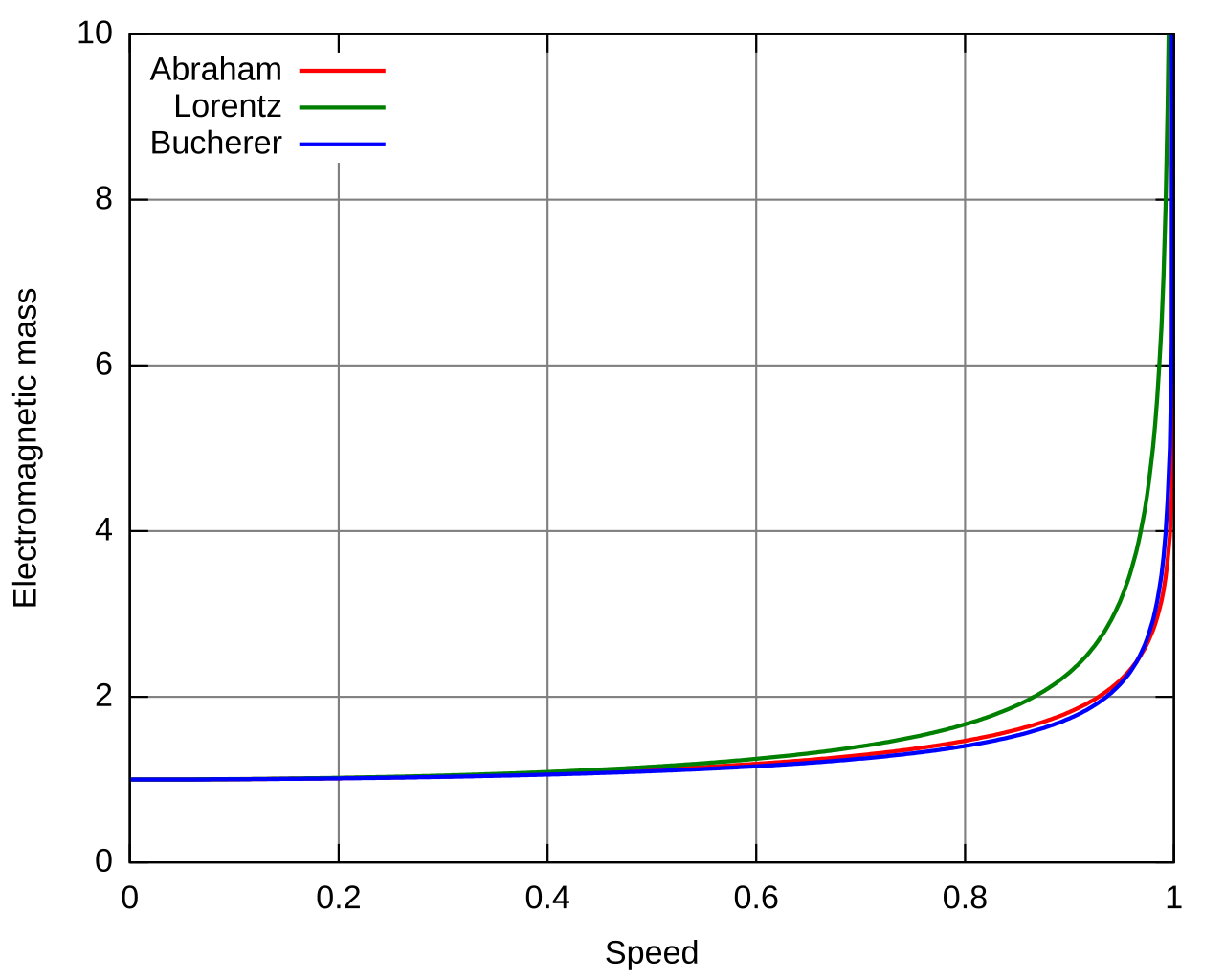
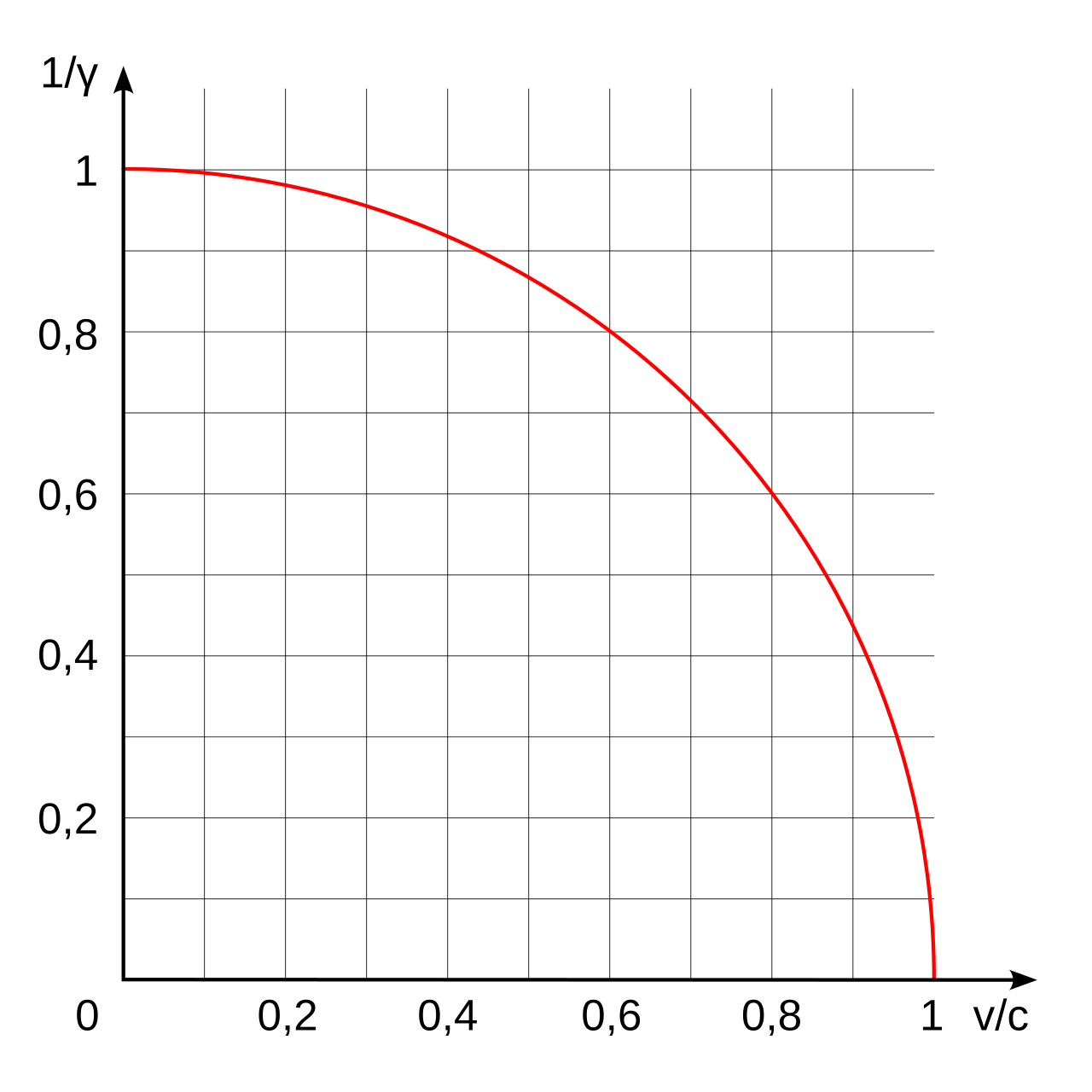
The Lorentz factor is defined as γ = 1/√(1 − v²/c²) = 1/√(1 − β²) = dt/dτ, where v is relative velocity between inertial frames, c is the speed of light, β is v/c, t is coordinate time, and τ is proper time. Some authors define its reciprocal α = 1/γ = √(1 − v²/c²). The name originates from its earlier appearance in Lorentzian electrodynamics, named after the Dutch physicist Hendrik Lorentz. The factor appears in the Lorentz transformation for a boost in the x-direction, where t′ = γ(t − vx/c²) and x′ = γ(x − vt). Corollaries include time dilation (Δt′ = γΔt) and length contraction (Δx′ = Δx/γ). In relativistic dynamics, it gives relativistic mass m = γm₀, relativistic momentum p→ = γm₀v→, and relativistic kinetic energy Eₖ = (γ − 1)m₀c².
Reader's Guide
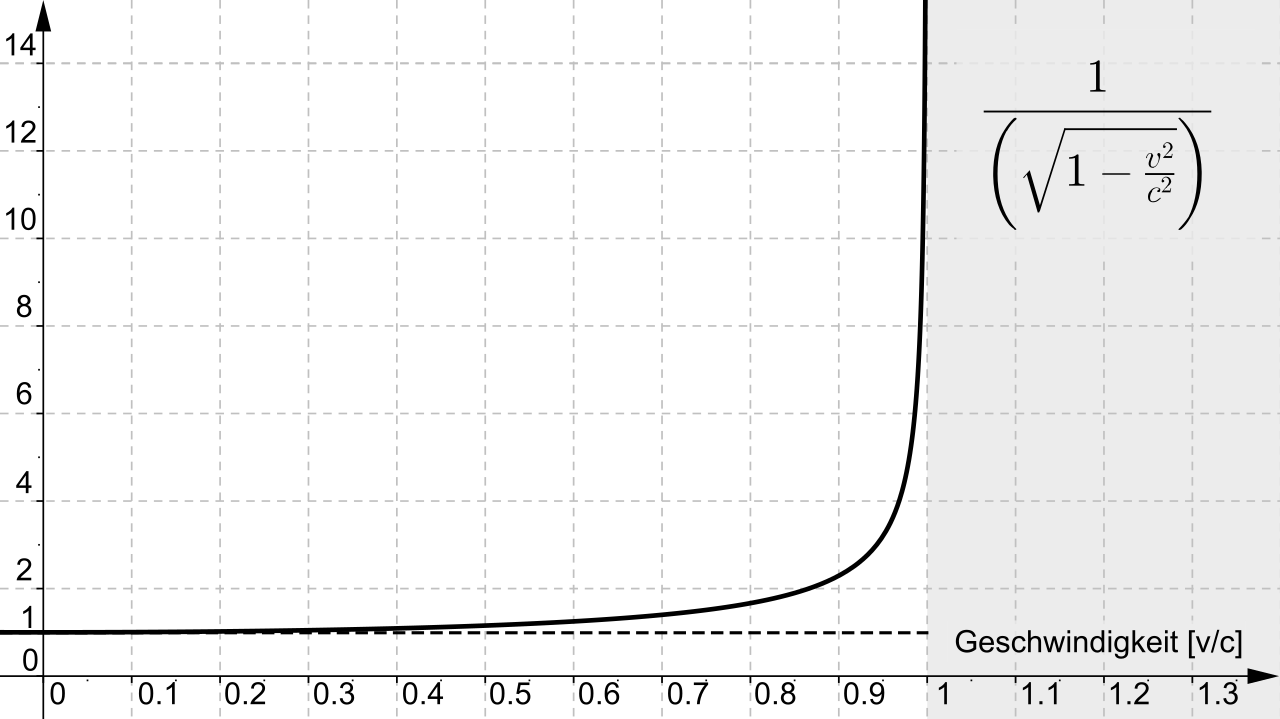
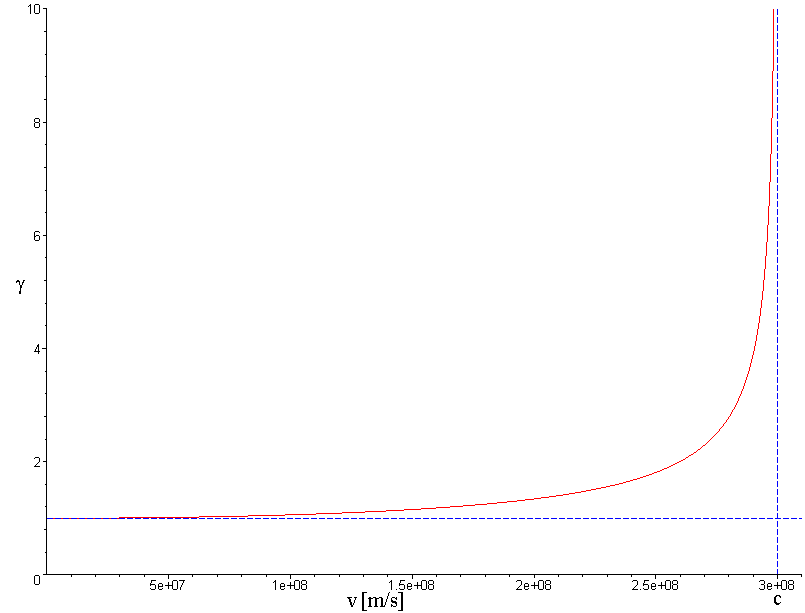
The Lorentz factor is central to special relativity, governing how spacetime coordinates transform between inertial frames. Its definition directly yields time dilation and length contraction, which are experimentally confirmed effects. In dynamics, it modifies mass, momentum, and kinetic energy at high speeds, with the non-relativistic limit giving the classical kinetic energy ½m₀v². The factor is also used in discussions of superluminal motion, where it is sometimes written as Γ. Its reciprocal α appears in velocity addition formulas. The factor's numerical values increase rapidly as v approaches c, becoming infinite at v = c, which underscores the speed-of-light limit. The Lorentz factor remains a fundamental tool in relativistic physics, appearing in equations from particle accelerators to cosmology.
Did You Know?
- The Lorentz factor is denoted γ (Greek lowercase gamma), but sometimes Γ (uppercase) in discussions of superluminal motion.
- It is defined as γ = 1/√(1 − v²/c²) = 1/√(1 − β²) = dt/dτ.
- The name originates from its earlier appearance in Lorentzian electrodynamics, named after Dutch physicist Hendrik Lorentz.
- The reciprocal α = 1/γ = √(1 − v²/c²) is used in the velocity addition formula.
The Collapse of Separate Space and Time
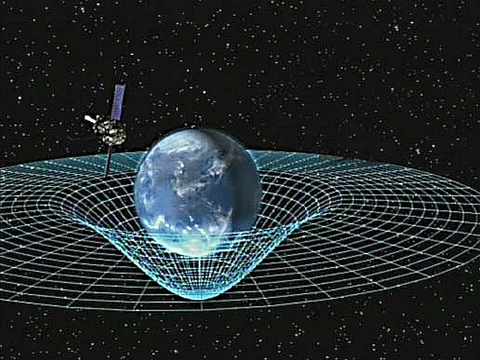
For centuries, physics treated the geometry of the universe—locations, shapes, distances, directions—as a three-dimensional structure entirely independent of time. Classical mechanics assumed that time flowed at a constant, universal rate for every observer regardless of motion, and that space obeyed the intuitive Euclidean rules of everyday experience. The Lorentz transformation and the special theory of relativity shattered this separation, forcing space and time to acquire entirely new meanings. In 1908, Hermann Minkowski delivered the geometric unification: time and the three spatial dimensions were fused into a single four-dimensional continuum, now called Minkowski space. This was not merely a notational convenience. The framework became indispensable for general relativity, where mass and energy curve spacetime itself. Under special relativity, the rate at which time passes for a given object is no longer absolute; it depends on that object's velocity relative to the observer. General relativity extends the picture further, showing that gravitational fields themselves can slow the passage of time as measured by an outside observer. The once-parallel tracks of space and time became, in the relativistic worldview, a single woven fabric.
Events, World Lines, and the Manifold Structure
In ordinary three-dimensional space, locating a point requires three coordinates—conventionally labeled x, y, and z. Spacetime adds a fourth: the time coordinate t. Together these four numbers define what physicists call an event, a single, zero-duration point in the four-dimensional continuum. This is a crucial distinction from the popular analogies of firecrackers or sparks; a mathematical event has no duration, and no observer can be said to be in motion relative to an event in the way one might be relative to a popping firecracker. When a particle travels, its trajectory through spacetime is not a line through space at successive moments but a continuous sequence of events linked into a curve called the world line. The underlying mathematical structure is a manifold: locally, near any given point, spacetime appears flat, much as the surface of a globe looks flat when examined at a small enough scale. A scale factor, conventionally denoted c (the speed of light, roughly 300,000 kilometres or 190,000 miles per second), converts between spatial and temporal distances. Because of this enormous scale factor and the manifold property, at everyday speeds and human-scale distances, the world looks almost indistinguishable from a Euclidean one.
The Observer Is Not a Person
In the language of special relativity, the word observer carries a meaning radically different from its everyday use. It does not refer to a person standing at a particular location watching something happen. Instead, an observer is an entire inertial frame of reference—an inherently nonlocal construct. In the idealized model, this frame is equipped with a dense lattice of clocks, synchronized within that frame, extending indefinitely in all three spatial dimensions. Every point in space carries a clock, so any event occurring anywhere in the frame is registered instantly, with no propagation delay. A real, physical observer, of course, will always experience a delay between the emission of a light signal and its detection. In the data-reduction step after an experiment, the recorded arrival time is corrected backward to reflect what the idealized clock lattice would have registered. Physicists carefully distinguish between what one measures, after factoring out signal-propagation delays, and what one visually sees without such corrections. The failure to keep these two notions apart remains, according to the literature, a primary source of confusion among students encountering relativity for the first time.
From Aether to Anomaly: The Experimental Precursors
By the mid-nineteenth century, a growing body of optical experiments had settled a key question: light behaves as a wave rather than as a stream of particles. The observation of the Arago spot and careful differential measurements of light's speed in air versus water were among the results that confirmed the wave picture. Waves, however, were assumed to require a medium through which they propagate. For light, this led to the hypothesis of a luminiferous aether—an invisible substance filling all of space and serving as the carrier of light waves. Attempts to pin down the properties of this hypothetical medium produced contradictory outcomes. The Fizeau experiment of 1851, carried out by French physicist Hippolyte Fizeau, was one such effort. The Michelson–Morley experiment represented another. These sensitive measurements, beginning in the mid-1800s, revealed puzzling discrepancies between what was observed and what would be predicted if space truly obeyed Euclidean geometry. The aether hypothesis could not reconcile these results, and the accumulated anomalies set the stage for the radical rethinking of space and time that the Lorentz transformation and special relativity would eventually deliver.
Gallery
Frequently Asked Questions
Who is Lorentz factor?
The Lorentz factor, often called the gamma factor, is a dimensionless number in special relativity that quantifies how time, length, and other physical properties shift for a moving object as seen by an observer. It is conventionally written as the Greek letter γ (gamma) and sits at the core of the Lorentz transformations.
What are Lorentz factor's powers/role?
It governs the magnitude of relativistic time dilation and length contraction: the closer an object's speed gets to the speed of light, the larger γ becomes and the more extreme those distortions appear to a stationary observer. In essence, it is the single multiplier that tells you how much 'slower' a moving clock ticks or how much 'shorter' a moving rod looks.
How does Lorentz factor's story end?
As velocity approaches c, γ diverges toward infinity, which mathematically guarantees that no massive object can ever actually reach light speed. That unbounded growth is the built-in enforcement of the universal speed limit in special relativity.
Why is Lorentz factor important?
It threads through virtually every major equation in special relativity and Lorentzian electrodynamics, appearing in the relativistic energy formula, the momentum expression, and the space-time transformation between inertial frames. Without γ, the consistent link between what different observers measure would collapse.
What is Lorentz factor's symbol and where does it show up?
It is most commonly written as lowercase Greek gamma (γ), though some texts use uppercase Γ. You will encounter it in the Lorentz transformation equations, in E = γmc² for relativistic energy, and in p = γmv for relativistic momentum.
More in Relativity And Spacetime 1-22
Spotted an error? Know more?
This is a living reference — every entry is fact-audited, and reader corrections feed straight into our audit queue. Suggest an edit · See this site's audit record