Lorentz covariance
Property of spacetime ensuring equations hold in all inertial frames.

Hendrik Lorentz · Public domain
Lorentz covariance is a property of the underlying spacetime manifold in relativistic physics. It has two distinct but closely related meanings: a physical quantity is Lorentz covariant if it transforms under a given representation of the Lorentz group, and an equation is Lorentz covariant if it can be written in terms of Lorentz covariant quantities. The key property of such equations is that if they hold in one inertial frame, then they hold in any inertial frame, a requirement according to the principle of relativity.
- field
- Relativistic physics
- known_for
- Property of spacetime manifold; equations that hold in all inertial frames
- related_concept
- Lorentz invariance
Lore & Background
Lorentz covariance is a concept related to Lorentz symmetry, which is an equivalence of observation due to special relativity. It has been described as 'the feature of nature that says experimental results are independent of the orientation or the boost velocity of the laboratory through space'. Lorentz covariance has two distinct, but closely related meanings: a physical quantity is said to be Lorentz covariant if it transforms under a given representation of the Lorentz group, and an equation is said to be Lorentz covariant if it can be written in terms of Lorentz covariant quantities.
Reader's Guide
Lorentz covariance is fundamental to the formulation of relativistic physics. It ensures that the laws of physics, when expressed in terms of Lorentz covariant quantities, remain the same for all observers moving relative to one another within an inertial frame. This property is a requirement according to the principle of relativity, meaning all non-gravitational laws must make the same predictions for identical experiments in different inertial frames. The concept extends to local Lorentz covariance in general relativity, which applies only locally in an infinitesimal region of spacetime at every point. There is also a generalization to cover Poincaré covariance and Poincaré invariance.
Did You Know?
- Lorentz covariance has two distinct but closely related meanings: one for physical quantities and one for equations.
- A Lorentz covariant scalar, such as the spacetime interval, remains the same under Lorentz transformations and is said to be Lorentz invariant.
- If all components of a tensor vanish in one frame, they vanish in every frame, which is key to Lorentz covariant equations.
- Local Lorentz covariance, which follows from general relativity, refers to Lorentz covariance applying only locally in an infinitesimal region of spacetime at every point.
The Principle of Observational Equivalence
Lorentz symmetry, named for the Dutch physicist Hendrik Lorentz, sits at the heart of special relativity as a statement about the equivalence of observation. In plain terms, it asserts that the fundamental laws governing physical phenomena remain identical for every observer who moves at a constant velocity relative to any other, provided both remain within inertial frames of reference. This is not merely a mathematical convenience; it has been characterized as a deep feature of nature itself—the insistence that experimental outcomes do not shift depending on how a laboratory is oriented in space or how fast it is boosted through space. The principle of relativity demands this: any non-gravitational law must yield the same predictions for identical experiments conducted at the same spacetime event, regardless of which inertial frame the observer inhabits. Lorentz invariance thus functions as a universal constraint, pruning away any theory that would privilege one state of uniform motion over another.
Two Faces of Covariance: Quantities and Equations
The term Lorentz covariance carries two closely related but distinct meanings that are essential to relativistic physics. First, a physical quantity is called Lorentz covariant when it transforms according to a specific representation of the Lorentz group. The representation theory of that group tells us these quantities are constructed from scalars, four-vectors, four-tensors, and spinors. A special case is the Lorentz covariant scalar, which remains unchanged under any Lorentz transformation and is therefore also called a Lorentz invariant, corresponding to the trivial representation. Second, an equation earns the label Lorentz covariant when it can be expressed entirely in terms of such covariant quantities. The critical consequence is that if the equation holds in one inertial frame, it automatically holds in every inertial frame. This follows from a foundational tensor result: if all components of a tensor vanish in one frame, they vanish in all frames. This property is not optional; it is a direct requirement of the principle of relativity, ensuring that non-gravitational laws make identical predictions across frames.
The Invariant Landscape: Scalars, Intervals, and Mass
A practical way to identify the transformational character of a Lorentz tensor is to count its free indices: zero indices mark a scalar, one marks a vector, and so on. Among the most physically meaningful Lorentz invariants is the spacetime interval, computed as the contraction of two displacement four-vectors with the Minkowski metric, yielding c squared times the time displacement squared minus the sum of squared spatial displacements. When this interval is positive, it defines proper time along a timelike path; when negative, its magnitude gives the proper distance for a spacelike separation. Rest mass appears as another invariant, expressible as the square root of the contraction of the four-momentum with itself, equivalently as energy squared over c squared minus the sum of squared spatial momenta. In electromagnetism, the contraction of the field tensor with itself produces invariants built from the magnetic and electric field magnitudes. All of these quantities remain the same for every inertial observer, embodying the trivial representation of the Lorentz group.
From Global to Local: Covariance in Curved Spacetime
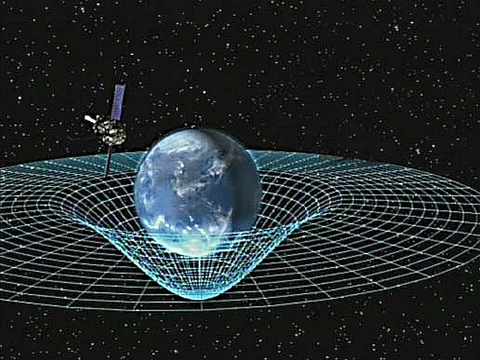
While the discussion above assumes a flat Minkowski spacetime, general relativity introduces a crucial refinement: local Lorentz covariance. In a curved spacetime manifold, the full Lorentz symmetry no longer holds globally, but it survives in a restricted sense, applying only within an infinitesimal neighborhood around every point. This means that at any given event, one can choose a local inertial frame in which the laws of physics take their special-relativistic form, but the choice of frame from point to point must be handled with care. On such manifolds, the terms covariant and contravariant describe how objects transform under general coordinate transformations, and both covariant and contravariant four-vectors can qualify as Lorentz covariant quantities. The framework also extends naturally to encompass Poincaré covariance and Poincaré invariance, broadening the symmetry group to include translations in spacetime alongside Lorentz transformations.
Gallery
Frequently Asked Questions
Who is Lorentz covariance?
Lorentz covariance is a structural property of the spacetime manifold in relativistic physics that dictates how physical quantities and equations must behave when you switch between inertial reference frames. It is the rulebook ensuring that any quantity transforming under a representation of the Lorentz group, and any equation built from such quantities, remains valid for every inertial observer.
What are Lorentz covariance's powers or role?
Its core power is guaranteeing that a physical equation valid in one inertial frame is automatically valid in every other inertial frame, fulfilling the principle of relativity. It achieves this by requiring all terms in an equation to transform consistently under the Lorentz group, so no single observer receives a privileged description of nature's laws.
How does Lorentz covariance's story end?
Lorentz covariance has no traditional ending because it is a permanent, foundational feature of relativistic spacetime rather than a plot event. Its legacy persists in every relativistic field equation, from Maxwell's electromagnetism to the Einstein field equations, where it remains the structural backbone of frame-independent physics.
Why is Lorentz covariance important?
Without it, the laws of physics would appear different to observers in uniform motion, directly violating the principle of relativity. It provides the mathematical mechanism for writing a single universal set of equations valid for all inertial observers, which is why it underpins both special and general relativity.
How is Lorentz covariance different from Lorentz invariance?
Lorentz invariance means a quantity or equation stays completely unchanged under a Lorentz transformation, whereas Lorentz covariance allows quantities to change in a specific, well-defined way as long as the overall equation retains its form. In practice, covariant quantities serve as the building blocks, and invariance is the special case where the transformation leaves the object entirely untouched.
More in Relativity And Spacetime 1-22
Spotted an error? Know more?
This is a living reference — every entry is fact-audited, and reader corrections feed straight into our audit queue. Suggest an edit · See this site's audit record