Frequently Asked Questions
The most-asked questions about relativity and spacetime.
What is relativity, in plain terms?
Relativity is the framework of physics that replaced the old idea of absolute space and time, showing that measurements of distance, duration, and simultaneity depend on the observer's motion and the gravitational field they inhabit. It comes in two parts: special relativity (1905) for uniform-motion frames and general relativity (1915) for gravity and acceleration.
Who are the central figures behind the theory?
Albert Einstein is the most prominent name, but Hermann Minkowski forged the four-dimensional geometry that underpins the math, and later figures such as John Wheeler, Roger Penrose, and Kip Thorne extended the ideas into black holes, cosmology, and gravitational-wave physics.
Where should a complete beginner start?
A solid entry point is Einstein's own 1916 popular book, 'Relativity: The Special and the General Theory,' followed by a calculus-based physics text that builds up the Lorentz transformations before tackling the Einstein field equations. Video walkthroughs of spacetime geometry also help build intuition before the heavy math.
What exactly is 'spacetime'?
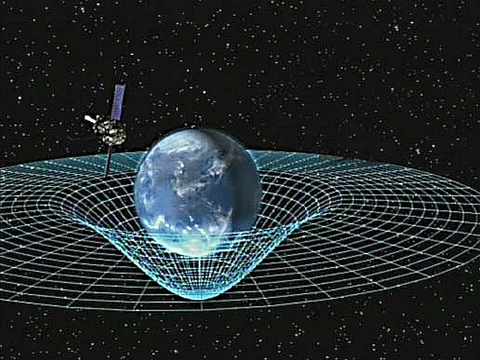
Spacetime is the four-dimensional continuum—three spatial dimensions plus time—within which every physical event is located, replacing the separate Newtonian ideas of universal space and universal time. In general relativity, mass and energy curve this continuum, and that curvature is what we experience as gravity.
Is time dilation real or just a thought experiment?
Time dilation means a clock moving relative to you, or one sitting deeper in a gravitational well, ticks more slowly than a clock at rest with you, and it has been confirmed to parts per billion by atomic clocks flown on aircraft and by the relativistic corrections engineers bake into GPS satellites daily. It is a geometric property of spacetime, not a measurement artifact.
What's the difference between special and general relativity?
Special relativity governs observers in uniform motion and introduces the invariance of the speed of light, time dilation, length contraction, and the mass-energy equivalence E = mc². General relativity extends the framework to accelerated frames and reinterprets gravity as the curvature of spacetime produced by mass and energy rather than as a force.
Why is E = mc² so famous?
It states that mass and energy are two forms of the same quantity, with the conversion factor being the speed of light squared, so even a tiny amount of mass corresponds to an enormous energy release. This relation underlies nuclear fission, fusion in stars, and the energy budget of particle accelerators.
What were the landmark experimental confirmations?
The 1919 solar-eclipse expedition led by Arthur Eddington showed starlight bending around the Sun, the 1971 Hafele–Keating flights verified relativistic clock shifts with commercial aircraft, and in 2015 LIGO detected gravitational waves from merging black holes—confirming a prediction made a full century earlier.
What is the 'twin paradox' and is it truly a paradox?
It is a thought experiment in which one twin travels at relativistic speed and returns younger than the stay-at-home twin; it is only a 'paradox' in the sense that the situation looks symmetric until you account for the traveling twin's acceleration and change of inertial frames. The asymmetry resolves the apparent contradiction, and the effect has been measured with muon decays and precision atomic clocks.
What are some of the most striking modern developments?
The direct imaging of a black-hole shadow by the Event Horizon Telescope in 2019, the 2017 neutron-star merger detected in both gravitational waves and light (GW170817), and ongoing work toward a quantum theory of gravity all keep the field at the frontier of physics. Each result ties back to the geometric picture Einstein and Minkowski laid out over a century ago.